 It belongs to a lovely sterling teapot. The teapot belongs to us - or at least it did until we recently sold it in what many would think was an unsentimental, rash, mercenary gesture. After all, it's a family piece (albeit from a family member whose monogram we do not recognize . . .), and it's truly beautiful, and we love sterling items - so what were we thinking?
 It's even an older, heavier teapot from the 1930s (see the ivory insulators on the handle!), which we also love. But, the problem is that tea from a silver pot isn't nearly as delicious as from a china one ~ gasp! Who could have guessed?
 How can this be? What do you think tea lovers? Do you prefer tea from a silver teapot? So, our teapot and the rest of its set have a new home and we're purchasing another sterling item that we love with the proceeds . . . upgrading our collection, if you will.
 And I'll be enjoying a cup of Formosa Oolong from my old ceramic teapot in the morning . . . and trying not to notice the empty spot on the sideboard.
 Note: If you like this pattern, it's called Plymouth and was made by Gorham and several other sterling manufacturers.


 And you don't have to be a martyr who is burned at the stake to do it. Although I'd almost be willing to go that far to be immortalized by Rossetti as Joan was (above).


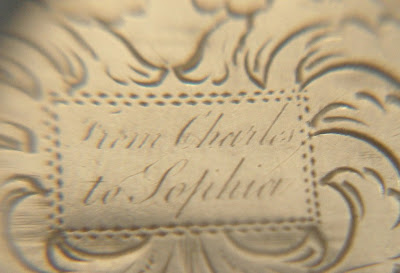
 Barely larger than a postage stamp, these vinaigrettes held aromatic mixtures that could revive a swooning lady or provide a pleasant aroma to mask the rude smells one encountered in daily life!
 Typically made of sterling silver, like this one, vinaigrettes held a tiny sponge beneath a little grilled screen.


 I enlarged it a great deal so you can see the intricacy - it's impossible to decipher. There are four letters, maybe even three Ms and an N - perhaps the original owner's name was something like Mary Margaret Newcombe Mason? Keep in mind that the whole salt spoon is around four inches so these letters are very small. The point is, it's a lovely item with a hand-engraved monogram. New silver usually has machine monograms and they just don't have the warmth and creativity of the old hand-engraved pieces. And, monogrammed items like these plates and silver are much less expensive than their unmonogrammed counterparts. The same goes for table linens.
 Often monograms on linen were created by the owner. This damask cloth is a perfect example; you can tell the embroiderer was an amateur, but it's still lovely. Monogram patterns were available for the home stitcher and a large number of monogrammed items were created by young brides and matrons alike. The result for us is a ready supply of antique monogrammed linens - with a little patience you can even find your own monogram on eBay. If we didn't have electronic diversions today, perhaps we'd all be monogramming napkins or sheets right now? Oh well . . . no need to unplug, you can create a beautiful table with vintage monograms and you don't need a thimble or needle.
 Wouldn't it be great to sit outside on a sunny autumn day and sip tea from this teapot? Hope you're enjoying the leaves in your area - whether they're green, yellow, or red. Don't forget a cup of tea, too!

 No wonder Edwardians included a fruit course with most meals. Who could pass up a chance to use a fruit set like this one? Originally these knives had matching forks and probably serving pieces as well. This early 20th century set caught my eye, but is one of those charming vintage items that's just not practical due to the poor condition of the blades. On the bright side, though, they're beautiful and sometimes that's enough!
 But, don't save these just for special occasions - use them everyday. After all, one of the things tea lovers love about tea is that it offers a chance to relax and enjoy a few quiet, stress-free minutes. So add some beautiful accessories to your tea routine and you're sure to make time for tea more often - and who couldn't use more quiet, stress-free moments?


